00:21
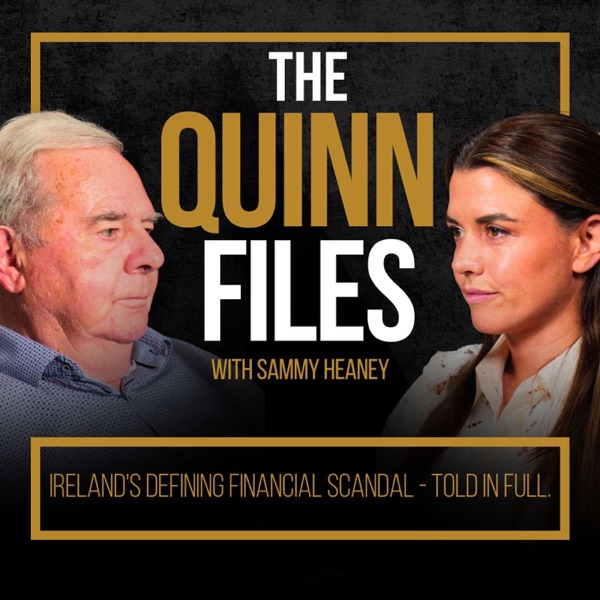
Right, Sean, here we are back for episode four of The Quinn Files. Yep. Back in the hot seat.
00:27
Back in the hot seat, yeah.
00:29
Yeah, we've a bit to go through today. There's been an amazing response. I'm going to just read out to you some of... So we've had... Today's Wednesday. Podcast went out Friday evening. So you could say it's been out there about four days.
00:45
And there's been over 2.5 million views... on the Quinn Files, across all different platforms. It's gone to number one in the Irish business podcast chart, three in the UK, top ten in Australia, and it's now charting its way to the top of America and Canada.
01:04
It's gone worldwide, and the response has been unbelievable. There's been hundreds and hundreds of comments.
01:12
How do you feel, or what are you sitting with about it?
01:15
I think that might be more due to you than it is to me. Maybe they're more interested in listening to you than me.
01:22
Because I have tried it a few times and there hasn't been that sort of response.
01:26
Yeah, well, it's a new medium. Well, not new, but it's a different medium, I suppose, for you, this podcasting thing. You watched it yourself.
01:34
I did, I did, I did. I thought it was very good and the editing was done on it I think was wonderful. So I just want to thank you very much and well done to yourself and Danielle and Carol for presenting it the way it was. I've got a lot of positive reviews but I suppose really the big story in all of this is the truth. has to come out.
01:56
And the reason that you and I were talking for the last couple of weeks was that there has been a narrative out there for the past 15, 20 years that the Quinn's done this, that and the other and the Quinn stole money and the Quinn's done all of this. And there's not even a scintilla of evidence to support that.
02:15
And unfortunately, I'm disappointed that the media or the politicians or nobody coming along to us. I wrote a book in 2023. I'd done a podcast in January of 2026 this year, just a few months ago. Doing another one now. And nobody is disputing any of the facts.
02:35
But yet, the media won't print the facts or the media won't talk about the facts. All they want to talk about, Kevin Lunney, Dublin Jimmy... And stuff like that. And they don't want to talk about the actual facts because, I mean, the position on this thing is quite clear. My kids, in 2007, my children, which owned 100% of the company, were ages between 20, Brenda was 20, and Colette was 32.
03:07
And the Irish government, through Anglo, or through agreements, put £2.34 billion into those kids' names.
03:17
without ever talking to them, meeting to them, writing to them, without doing anything.
03:23
And then what did they do? They went and took some of their companies because they had to cover up what they had done illegally. So the only way they could cover up was destroy the kids. I don't mind them destroying me. I was 80 last week, as you probably know, so I don't mind.
03:40
But destroying the kids, I mean, they have destroyed these kids' lives. And they're only, as I said, being 20 and 32 years of age. And I mean, they have put one of them in prison.
03:52
What they've done is, I mean, they took all their assets, which was generating, well, generating 400 or 500 million a year. But even their own privately held assets were generating 35, 40 million a year.
04:05
So for the first couple of months after they took the business, we took, the family took out income, rent and income from some of these assets in India, Russia and Ukraine for about three, four million pounds.
04:21
And they took assets of us worth billions.
04:25
And for the last 15 years, they have been absolutely persecuting the kids.
04:31
Day after day after day, for that three odd million pounds that they got of rent, which they own, on assets that they were after stealing.
04:44
And they're adding interest on a daily basis, penalties on a daily basis.
04:49
for a few million quid, and then after taking their properties, it was worth billions. I mean, there's no shame to these people at all.
04:58
Absolutely no shame, because it's a proven fact. And Judge Charlton said it in the first months.
05:06
These loans were illegal.
05:08
And yet, the illegality for the billions has been passed by. The media don't want to talk about it.
05:16
The government don't want to talk about it.
05:19
It doesn't come up in the Dáil. It's never mentioned. But it's actual fact.
05:24
And they have ruined these kids' lives. And I suppose they're going a long way to ruining my grandkids' lives. When this started, I had no grandkids. Now I have 14.
05:37
And so they don't know what's going on at all. Granddad, did you own that hotel? Or how did you lose that hotel? And this, that and the other. It's unbelievable what they've done to us as a family. And I wouldn't mind anything that I've done wrong. I'm happy to put my hands up and accept the blame.
05:55
My kids done zero wrong. Absolutely zero.
06:01
So, I mean to put one of them in prison, and you only have to listen to the judgment of Judge Adrian Hardyman in 2012. An extensive judgment, and if you Google it, you'll get the judgment easily enough.
06:16
And what they'd done was totally, entirely wrong. And even putting us in prison, he even said that that was wrong as well. He dissented in that judgment. But for a Supreme Court judge to say that the Irish government were leaking stuff to the national press, that's outrageous. Because what that meant was this, and this I don't think can be disputed. You had the Irish government against the family.
06:46
You had the courts against the family.
06:50
You had the Garda against the family because there wouldn't, dozens of frauds, there wouldn't investigate one of them.
06:57
And the media. All the media wanted to talk about was Dublin Jimmy or frauds or CFDs. They didn't want to talk about any wrongdoing on behalf of the government. I mean, I just think that's outrageous because at the end of the day, you take RTE. Well, the taxpayer is supporting RTE.
07:19
And When I was, when a boy came to, Trevor Burney came to me in 2017, 2018, to do a documentary to prove that the Quinn story narrative was wrong. And he wanted to do a documentary on Sean Quinn to tell the true story.
07:37
And he ran along with that for 6-12 months, I'm not sure what period.
07:42
Then after 6, 12 months, he came back to me and he said, look it, I've got 30,000 as a deposit from RTE.
07:51
But RTE were to take control of this.
07:54
And they want editorial control.
07:58
So I was foolish enough, but I had done a few interviews at the time, so I was right in the middle of it.
08:04
And I said, well, I hope editorial control, what does that mean? No, no, he says, I'll deal with that. I'll make sure your story is told.
08:12
Well, he just, I don't know how much he got in the end, but he told me he had got 30,000 as a deposit.
08:19
Well, he just turned the whole thing on his head and lay after lay after lay, and it even got worse.
08:27
The same guy done a book. On me then. The same week, Trevor Burney, then a book. And the lies that he came out with there was incredible.
08:38
So I think for RT to be involved in that sort of behaviour, and for them to take editorial control away from somebody that was going to tell a true story in reaction to the false story that was out there, I think that should be investigated. How can the national media come up with that one?
09:00
I did see the documentary. It's very well done. And the first episode or episode and a half very much tells your story and your rise in the business world. And it's brilliant. Watch. But then as you do go on into the next couple episodes, it does become very one-sided and you're in it much less. Yeah, yeah. And it's very much told from the government or the officials' side.
09:24
He told me that the government wouldn't talk to him, Alan Dukes wouldn't talk to him, the press wouldn't talk to him, he wasn't, or Quinn Group executives wouldn't talk to him. But sure, it finished up. We're all in it. 90% of them, it was nearly all in it. It was their side of the story he told.
09:40
Yeah, yeah.
09:41
So let's go back because we've looked through all of the comments. We've read them all. And what I'd like to do today is address some of the stuff that's maybe a little unclear to people or that we're getting confused. So I think a good place to start is you were talking about the kids... and the loans that were put into their name July 2008. So a lot of people in the comments are kind of saying, what's the big deal? If I was given all that money, great, work away, put it in my bank account.
10:14
But I think maybe we need to clarify that This wasn't, you weren't being handed or your kids weren't being handed millions of pounds. And I actually think the word loan, even though that is what it's called as a loan, it's more like a debt they were handed. It wasn't like they were handed all this money to go and spend. They were put into debt.
10:34
Talking about the 2.34 billion, well, that started in September 2007. So initially that was for supporting the CFDs. When the CFD value goes down, when the share value goes down, there's a call on the money.
10:53
But by March, April, May, June, they were getting uneasy because they had stuck in nearly 2 billion at this stage.
11:00
And then they decided, look, we'll get rid of the CFDs.
11:03
Yeah, this was their way of solving the problem.
11:06
Of solving the problem, which I think maybe created a bigger problem. But anyway, I objected to that.
11:13
And they'd done it despite my objections. And I said, no way, that just can't happen.
11:19
Why did you object to it? What was your way of solving the situation?
11:22
The way I saw that was very simple.
11:25
In 2007, when I told Sean Fitzpatrick and David Drumm that we had 25% of the bank in CFDs and we had all our money spent, we had no further funds to put into it.
11:38
Well, if they didn't have to open them out, the following week or the following month, when there would be a call on the family to meet the 50, 100, 10 million, whatever it was, we didn't have the money. So we had to sell the share.
11:53
So you were happy to sell the shares at that point?
11:56
We didn't have a choice.
11:57
Wouldn't life have been so much easier if you did? That's it. If you did, what was your loss at that point? 600 million.
12:04
600 odd million.
12:04
So you would have been able to just write off 600 million. You would have made it back probably in a year, two years.
12:10
Well, sure. We made 800 million in the two years that it happened. 2007, 2008, the company, including privately held assets and all, We made over 800 million in 2007, 2008, and we lost 660 million. So we were still profitable. But the big one came here along when they said, look it, we want rid of the CFDs.
12:35
And they decided they were going to go long on the shares, which means buy them out, no more CFDs. So they got the Maple 10 to take 10% of it.
12:47
Maple 10 was 10 different individuals. 1% each. And this was all found to be illegal in courts later on, a few years later when it was investigated.
12:57
I honestly don't know. I think maybe the Maple 10 loans were seen, unbelievably, I think they were seen as illegal. I don't know. All I can do is tell you what happened.
13:12
And what happened was, I objected strongly to this going in. Because I said, if you want to do that, why didn't you sell them a year ago and not be putting in 1.7, 1.8 billion and then selling them?
13:24
So just so it is clear...
13:27
But the loans, and I think the word loan is throwing us off. The debts, you could say, that was put into the kids' names. It wasn't a loan. It wasn't like they were saying, there's a couple hundred million pound lads, go ahead and spend it. It was put into their names as a way of helping unwind this whole CFD thing. That's right. So these kids of yours who were aged from 20 to 32 at the time went from...
13:55
just having shareholds in companies.
13:59
They didn't know about it.
14:00
Yeah, to all of a sudden being told, you are now 488 million euros in debt to us. That's right. And that's how that went. That's right.
14:09
And then it was done, as regards us getting a penny, not a penny, it went to Cyprus, it was... Something was done in Cyprus. The money went to Cyprus.
14:16
I don't know where it went. To be clear on that as well, it was done through Cypriot companies that they weren't even aware that were set up because this all went to court later and they did say we weren't even aware these Cypriot companies existed. And again, I suppose it's...
14:35
People might go, well, how can you not realise that companies existed in your name?
14:40
When you own so many companies and there's so much paperwork, and you did talk about this the last time, you're just trusting people and you're signing accounts, you're signing legal letters, you're signing, signing, signing. So to do due diligence, you would nearly need to have your full-time job to be just reading everything through that you signed. So there was a bit too much trust maybe put into people and documents were signed.
15:04
And I have to take responsibility for that because I done that from 1973. I done that all day, every day. I often signed ten letters when I'd be on a phone call. I never read one of them. And I suppose the children saw me doing that and done that, and they said, well, look, if it's good enough for Daddy, it's good enough for us. And then Daddy might be in bad humour if we don't sign it. So I can understand that. I have no blame to them at all. But this is what the Irish government done to them.
15:31
Yeah, okay. So just that that's clear, that they were all put into debt, extreme debt, and Patricia as well.
15:39
And anything they're saying, you mentioned what they're saying. They did say anything. They never refused. The first time that any of us refused to say anything was put in front of us, when we were asked by Fry's to say in retrospective legal advice, that was the first time me or any of the family refused to say what was put in front of us.
15:58
Yeah, okay. And the 100 million as well that was put into Patricia's name was particularly strange because she didn't even have shares or anything in the company. Not a thing. It's like they could have just picked anyone. It could have came to me and just said, there's 100 million, you're in debt now. So it was illegal, but it did... I was reading into it. It did go to court. They deemed what happened with the Maple 10 and those loans illegal and parts of that illegal, but not what was done to the Quinn family.
16:31
That's right. Which was... There was some loophole or there was some way it was found...
16:37
But look at...
16:39
We couldn't afford legal advice. We couldn't afford solicitors. We couldn't afford barristers. The Irish government were financing this, and they had an open cheque book. It didn't mean whether they spent a million, ten million, or a hundred million, which they did. They spent millions on top of millions on top of it. We couldn't afford that. So, in fairness to the courts, did Paul Gallagher tell them that this £488.5 million was totally separate from the illegal loans.
17:12
Because there was the two sets of illegal loans. There was illegal share support.
17:16
Which happened first. First.
17:18
But then, were the courts aware of this £488.5 million, which Andy Kenny referred to, or whatever about that, which is outrageous, But for the two or three, three or four million of rent that we took from India, Russia and Ukraine, 15 years later, they're still adding interest and penalties onto that three or four million.
17:44
It's just never going to stop.
17:46
Never going to stop.
17:47
So they just want to ruin the kids for all of their lives. They've ruined them for the past 15 years, but they want to continue to ruin them and never give them a chance to put their nose up. I mean, can they start a new business in the morning? I mean, if the Quinns applied for an insurance licence tomorrow morning, I have no doubt we wouldn't get it. We'd be refused.
18:10
Sean I'm going to go to a couple of comments a lot of people asking about who ended up with these assets and we have this is one from John Daly the simple question one should ask is who benefited from the financial destruction of the entrepreneur Sean Quinn
18:27
Well, I suppose all the people that eat off the carcass for the last 15 years, and there was thousands of people, you know, there was fees coming out on a daily basis, so they all benefit. As regards the assets themselves, well, some of the assets were bought very cheap because people generally didn't want buying assets that were in dispute.
18:50
But I suppose they've left people in a very awkward position because there's people working in some of our businesses that genuinely, genuinely believe that they are working in assets that were stolen from us.
19:05
And they are. There's no question about that. These assets were stolen from the Quinns.
19:09
Now, I don't blame the people for working in them. They have to work on the right, and I would encourage them to work on it. But the facts of it are, those businesses were all stolen, and that's what people are working in.
19:20
And now, as I said, I'll repeat.
19:23
The staff are not to blame for that, but certainly some of the management teams are fully aware... that these assets were stolen. And they're still happy to manage them.
19:33
We'll move on to the next one then, Jason Collins. Hard to know the whole truth, really. Good employer, I'd say. But what happened to all these properties abroad?
19:42
I don't know.
19:43
Okay.
19:43
I don't know. What I do know is that, again, the media, I suppose the media are going to say that I'm laying in too heavy on them. What I saw on the paper, sir, because we haven't bought papers in 15 years in our eyes, but there'll be stuff sent on to us and stuff that Patricia reads on the internet and this, that and the other.
20:04
And it was stated that some of our assets were overvalued back in 2007, 8, 9, 10.
20:12
Well, there's not much saying of that because, I mean, I bought a hotel in the 90s in Cambridge in England for $11.25 million.
20:23
Michael Noonan sold it for $38 million. There was the Hilton in Prague. I bought two hotels for $140 million.
20:32
They're selling one of them, I believe, now. Whether it's stolen, I don't know. But they've been talking about a figure between 250 and 300 million for an hotel, one of the hotels.
20:43
And I paid 145, I think it was, for two of them. So they had more than doubled, and the one in Cambridge more than tripled. And the ones in Krakow, the ones in Bulgaria, you know, any of the properties we bought, they're all worth a lot more than they were valued at the time. But what they've done with that money, and I can't understand, because we promised, committed, to David Drumm, Sean Fitzpatrick and Donal O'Connor, that we would pay all of the money back.
21:16
These are the guys in Anglo.
21:17
Correct. Why is nobody coming up with the figure that Michael Noonan, Enda Kenny and Alan Dukes felt they would get a better result by destroying the Quinn Group and taking it over? Why is nobody asking the question? How much did they get? Is it unheard of?
21:35
in Ireland, that the Garda will not investigate crime. And that's a fact. They refused bluntly to investigate crime. Reported by me, by others, by a solicitor.
21:48
Dozens of occasions. I put in three days telling the Garda. Why is all this thing hidden? This is serious, serious stuff. And it's been hidden by government, by the courts, by the media... Everybody is hiding this and doesn't want to discuss it.
22:05
The likes of the hotels that are only being sold now, where does that money go?
22:11
No idea. No idea.
22:12
Maybe they'll lower the price of diesel when they sell all these hotels and make all the money.
22:18
This one now I don't really understand. I don't know much about NAMA. How much did McCann Fitzgerald make off NAMA?
22:25
I have no idea. All I know is that NAMA was one of the biggest disasters in the history of the country.
22:32
I must read more into NAMM. I remember by the time NAMM came round...
22:36
I'd love a debate on that.
22:37
I had lost interest. I had actually moved to Australia because there was no work here. But NAMM, I'm not.
22:46
That made no sense. That was just...
22:48
Whenever we were taking over the win group, So that was just as stupid. Taking over Irish banks that were making billions and destroying them. In other words, they were making profits of maybe 2, 3, 4 billion a year and just closing them down and destroying them. Absolutely crazy.
23:06
So this is kind of around the people are asking, why has nobody else been held accountable? So a TikTok comment said, corrupt criminals at the top is what we are battling with. Why has this not been investigated and exposed to on the world media? And I suppose you have said that numerous times.
23:25
Yeah, well, I have, but I'll just say it again. I mean, it's now a fact, and I can give evidence, as much evidence on this as they want, that the Irish government are knowingly dealing with a criminal for the last 15-16 years, a proven criminal, Liam McCaffrey.
23:44
So normally a government and the Garda and the media will support the victim of a crime.
23:54
In this case, They're supporting the criminal at the expense of the victim.
24:01
It doesn't make any sense.
24:03
And they know that. It's not a matter of debate.
24:09
do you know and then on that someone says how has none of the bankers went to jail even though some had to be extradited so yeah none of the bank one banker did jail am I right in Dennis there was a number of bankers there was a number of bankers done jail but I mean there was one banker done done jail which I think was a travesty of justice this is per Dennis Casey that's Dennis Casey that was absolutely unbelievable whatever they done to me Yeah.
24:40
They're doing worse to Dennis Casey. Because Dennis Casey, he went into the central bank to meet the central bank governor.
24:48
This would have been around 2007? 2008. 2008.
24:52
And him, the central bank governor and the regulator...
24:57
told him to wear the green jersey and to assist each other, themselves in anger, to assist each other in times of crisis, difficult times. Wear the green jersey and at year end help each other out.
25:10
They'd done exactly that and they were put in prison.
25:13
I read some of the court documents and he said that he was asked to wear the green jersey, which became a kind of a phrase at the time, which, as you say, helped each other out. So what he did then was he transferred 7.2 billion, wasn't it, from Irish Life Impermanent? That's right.
25:31
You've read it up, right?
25:32
Yeah, I went down a rabbit hole last night. True Irish Life Impermanent into another company.
25:40
That's right, that's right.
25:41
into Anglo to make it look like when Anglo's was coming to year end it looked like that money had been given to them from a customer but it was actually Anglo's money that first of all went Irish life impermanent.
25:56
Well I don't know what way they'd have swapped around I mean it'd be put in the last day of your financial year and it'd be taken out within 48 hours or so like that it'd be taken out straight away but the thing about that is That was done to assist the banking system.
26:16
There was no cover-up in that. It was wrong, it was illegal, fine.
26:21
But the government promoted it.
26:25
And as I said at the beginning of this podcast, I think the biggest crime in all of this is the cover-up.
26:33
If Anglo put in money into Quinn shares, CFDs, illegally...
26:40
They thought they were doing it for the right reason.
26:43
But they personally had no financial benefit in doing it.
26:47
Well, it made them look good and it meant they didn't collapse.
26:51
Well, it did, yeah. But, I mean, they had no direct... It didn't improve their pocket.
26:55
Okay, yeah.
26:56
It might have made their company better, but it didn't make them personally any better. But some of the stuff went on after. The fraud.
27:03
Yeah.
27:04
And the cover-up. I mean, I'd say there'd be...
27:11
when this is done finally done and the cows come home to roost and that we'll see the amount of malfeasance and the amount of perverting the court of justice I'd say it'll go for pages pages and pages and it'll also go showing the level of criminality and case law what the penalties was for that for that illegality.
27:44
And that's what you and I have to do, is prepare all that information that is there, is clear, it's undisputed, and it's up to people a lot brighter than me to bring all that together and sell the picture of this, what was done illegally in 2007 and 2008, and it was covered up for the following 15, 20 years, whatever it might be.
28:07
and just before we move on from Dennis Casey when I was down my rabbit hole reading this it was the reason they found him guilty was because in court he said I was told to put on the green jersey to help out and the reason that the guys who told him that got offered it was because they said but putting on the green jersey is not specific enough to say move 7.2 billion from here to here to here So that's how he was found guilty.
28:38
And he was sent to jail for nearly three years. That's a long time.
28:41
It was wrong, wrong, wrong, wrong.
28:43
And everyone else got off with it.
28:46
I mean, it was worse than that. Judge Nolan named people in the regulator's office.
28:54
In the court.
28:55
He named them.
28:57
I'm not going to name them, but they're well known. He named them. They didn't go to jail.
29:02
And they were representing the government. They were telling Dennis Casey what to do.
29:09
And he named them.
29:10
But yet, they got off scot-free.
29:13
And in a way it's a little bit scary.
29:14
And I've got bigger redundancy packages. Sorry.
29:17
In a way it's a little bit scary because I suppose moving forward and hopefully if people can take something from this it's don't necessarily, just because you've been told to do something by someone who comes across as higher up and in charge.
29:30
You shouldn't necessarily do it, and definitely go and seek your own outside legal advice before. Yeah, yeah, yeah. Because you're not necessarily going to get looked after.
29:38
Just because somebody tells you to walk across in front of a car, you shouldn't do it.
29:41
Yeah, yeah. No. Have you ever met Dennis Casey?
29:45
No, I never met the man, I never spoke to the man. I don't know anything about him, but anything I see or hear from him, he's a decent man.
29:52
Okay.
29:53
Who was...
29:55
Absolutely destroyed by the Irish government and the courts. It was just totally and absolutely wrong.
30:02
Okay, so just coming back to some of the comments. This was on YouTube, left by Thomas O'Rourke. And it says, why is Alan Dukes not responding to this interview? Why is he keeping quiet?
30:15
Well, I suppose the people in the border area knows all about Alan Dukes, you know, when he said they had a different DNA in their blood and more violence and stuff like that, so people know a lot about Alan Dukes, but Alan Dukes, in my view, has an awful lot to answer for, because he was appointed by Brian Lenehan, Minister for Finance, at the end of 2008.
30:42
as a director on behalf of the Irish public. He was a public interest director.
30:50
A public interest director, in my view, should look in the public interest.
30:55
And was it in the public interest for him not to take my £2.8 billion?
31:04
Sure it wasn't.
31:06
What did he do? He covered up for it.
31:09
He let Cardiff hire a man that had never done an exam.
31:17
He let them do whatever they wanted. And he was the main cover-up.
31:22
For it, as he should have been saying when he went in, a former Minister for Finance, and now acting in the public interest, and he allowed all that went ahead a few months earlier, the 488 million for the family, and all this sort of cracks. It was crazy. He did not do his job.
31:43
Not doing his job is one thing, but doing the opposite. And telling lies about me.
31:50
And telling lies about the money he was going to get back.
31:53
That's a lot worse. So Alan Dukes would have been a major, major problem. And I think that Alan Dukes, if it was in any other country, he'd have got time behind bars.
32:05
Have you ever spoke directly to him? Have you ever had a back and forth with him? No.
32:08
Only the day we met him. Oh, down in Dublin. Down in Dublin. Yeah.
32:12
And since that?
32:14
I met him once or twice since that. But any time I met him, it was a lecturing match. You know, I'm all in Dukes and we'll tell you what to do and we'll do this, that and the other and we are taking your business.
32:26
So this comment's actually on TikTok. It says, I don't know anything about this. Do you know about...
32:47
No, I don't want to get involved in other companies' affairs either. I mean, whatever happened, what I can say is that we as a company, or me as an individual, I always voted for Fianna Fáil.
33:03
Maybe not now, but I did for 20 or 30 years.
33:08
And I still vote for them ahead of Fianna Fáil.
33:13
I was never big into donations or anything like that. Anybody ever came to our house to sell tickets or for a donation, we always tried to help and we always done our bit. But we tried to keep out of the whole political scene and didn't really get involved. I wouldn't want talking about Larry Goodman's goings-on with government either. That's none of my business really, you know.
33:37
In the comments, a lot of people are saying that you were just greedy. The word greed is mentioned a lot. So that brings me to a couple of these comments. I don't know how you feel about being called greedy, but I'll read out a couple of these and you can respond them. So this comment says,
34:10
Well, the first one will say my greed. I suppose I was ambitious, and whether it was in sport or whether it was in business, anything, you know, I like winning.
34:22
And I think everybody likes winning.
34:24
Some people are more capable of winning than others, and I might have been in that category.
34:32
But as regards me not complaining...
34:36
The simple facts of it are that I lost £660 million. These are the facts. I lost £660 million of group, family, money, whatever you might call it. Fact.
34:51
in 2007-2008.
34:54
In those same two years, I made over £800 million. So, how the question being asked, really, it should be asked of the government, it shouldn't be asked of me, because it was the government put in that money, that extra £2.34 billion.
35:13
I didn't ask for that money.
35:16
I told Sean Fitzpatrick-David Drum what the position was. We had no further funds. They spoke to the government that day and the next day, and they put in that money. I think the problem about it is they should never, ever have put it in the kids' names, those aged between 20 and 32 years of age.
35:34
put a further 2.34 billion of debt in their name without talking to them. They should have done what AIB or Bank of Ireland would do, and that is, when there'd be a call on the shares, we had to sell the shares. And we'd have lost our 660 million, but we could well afford to lose it.
35:51
Yeah, and I suppose to come back to greed, Like, if it had been a success... You're saying ambitious, I get that. I don't know why people want to call it greed and greed. If you're a multi-billionaire, you're making all this money, you need to reinvest it, you need to try stuff, you need to look at different options.
36:10
And that's what you were doing. So, I don't know, to call it greed sort of baffles me.
36:15
Well, money was never made God. But I've said it before, I've said it a number of times, and that is that when we won the first senior championship in 1969 in Fermanagh, we were greedy enough that we wanted to win more. And we did. We won four more.
36:36
Was that greed? No. Is it greedy for Limerick to win too many Hurling on Ireland? Is it greedy for Dublin or Kerry to win? Of course it's greedy. It's ambition. But in this life, try to be successful. Because there's a lot of people in the world that's not able to look after themselves. Children, pensioners and people who were born a bit unlucky. So there's a lot of people that have to be looked after.
36:59
I was fortunate enough to be in a position to assist in that.
37:05
And I think that anybody with any ambition should be proud of that. And they shouldn't be criticised. I mean, if you take that girl, Kate Somebody from Loud that won the gold medal there a couple of weeks ago, or the fella from Donegal that won the gold, or the girl swimmer, I watched that very, very closely. And I was full of pride to see the success that they achieved. And the amount of time and effort that they put in in doing that... It was unbelievable and I was absolutely delighted as I was to see Mayo win North Ireland.
37:41
We all get great enjoyment from people being successful and after all that Mayo had been through, it was one of the best days of my life to see them coming through and winning North Ireland.
37:51
I suppose there's a fine line between maybe I'm saying it wrong but greed and I like the way you replace the word greed with ambitious so that's what I'm going to do from now on when I read the comments and I see the word greed I'll just replace it with ambitious because those guys that you're talking about they need to be greedy or ambitious to say I want another All-Ireland I want this I need this and I don't want the silver I don't want the bronze I want the gold and it's brilliant when I get it
38:20
Bye.